
Resistance Bands Review:
Are They Worth It for Home Workouts?
Let's be honest: a strip of elastic does not exactly scream "serious fitness equipment." It looks more like something you'd find holding a bunch of broccoli together than something that could actually build strength. And yet resistance bands have become one of the most popular pieces of home gym kit going, especially for small UK homes where space is precious and gym memberships feel like an expensive way to queue for a squat rack.
So are they actually any good, or just cheap, colourful elastic riding on hype? Here's the full rundown.
Quick verdict
Overall Rating
4/5
Best for
Beginners, home workouts, mobility, warm-ups, travel, small spaces
Go for a brand you trust
Less ideal for
Maximum strength, heavy leg training, precise progress tracking
Typical cost
£15-£35 for a decent starter set
Worth buying?
Yes, absolutely, especially as a first piece of home gym kit
Resistance bands are one of the best-value pieces of home gym equipment you can buy. They're affordable, easy to store, quiet enough for flats, and versatile enough for full-body workouts. They won't fully replace heavy dumbbells or a barbell, but for beginners, mobility work, warm-ups, and quick home sessions, they earn their place.
So what are resistance bands?
Resistance bands are elastic bands used to create tension during exercise. The further you stretch them, the harder the movement becomes — simple physics, dressed up as fitness equipment.
First impressions
The first thing you notice is just how little space they take up. Compared with dumbbells, benches, or anything with wheels, resistance bands barely register as "equipment" at all — more like a very determined hair tie.
Setup is refreshingly simple: no assembly, no charging, no reading a manual written by someone who clearly hates commas. Lighter bands can feel almost too easy at first, which might make you smug for about ninety seconds — right up until you try a heavier band and discover your shoulders have opinions about that decision.
Quality does vary a lot between the £5 bargain-bin sets and the sturdier options with proper handles and door anchors. The cheaper ones tend to feel it after a few months; the better sets last considerably longer and are worth the extra few pounds.
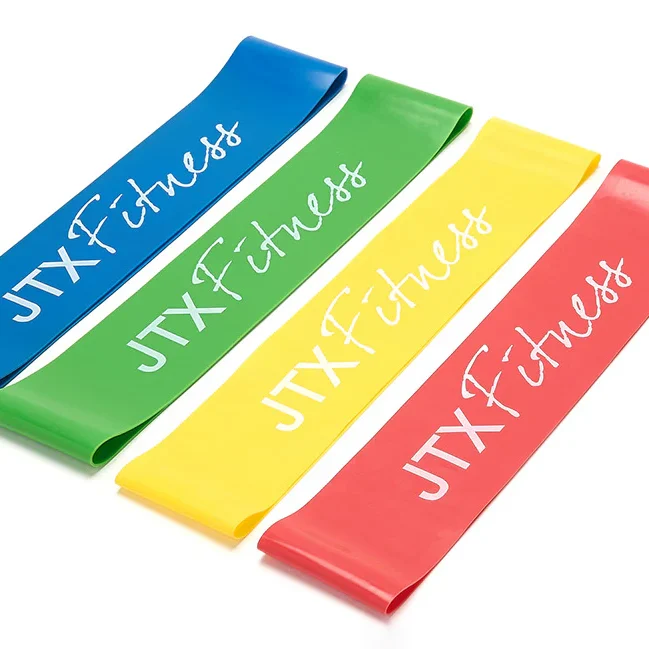
Great Deal On JTX Bands £9 OFF
Resistance Band Set
- Pack of 4 resistance bands
- Light to heavy resistance
- Increase your strength and tone muscle
£14£5 Click Here to go to site
Pros
- Affordable: Much cheaper than most weights or machines
- Space-saving: Fit in a drawer, bag, or cupboard
- Beginner-friendly: Easy to start with lighter resistance
- Joint-friendly: Smooth resistance can feel kinder than heavy weights
- Versatile: Useful for strength, stretching, mobility, warm-ups, and rehab-style work
- Portable: Easy to take on holiday, to work, or into the garden
- Quiet: Ideal for flats, terraces, and shared spaces
- Good for activation work: Great for glutes, shoulders, hips, and core muscles
Their biggest strength is convenience. If your workout kit is easy to grab and quick to put away, you're far more likely to actually use it. Resistance bands remove most of the usual excuses: no commute, no setup faff, no clanging weights, no need to sacrifice half the spare room to fitness equipment that then just sits there judging you.
Cons
- Harder to track progress: Band tension is less precise than dumbbell weight
- Resistance changes through the movement: Exercises often feel easiest at the start and hardest at the end
- Can snap or wear out: Bands need checking for cracks, tears, and thinning
- Less ideal for maximum strength: Heavy dumbbells, barbells, or machines are better for serious strength goals
- Anchoring can be awkward: Some exercises need a door anchor or secure fixing point
- Technique still matters: Poor form can still irritate joints
- Not always enough for lower-body strength: Stronger users may outgrow bands for legs quite quickly
The main downside is progression. With dumbbells, 10kg is 10kg, forever, reliably, like a small stubborn friend. With a band, resistance depends on how far it's stretched, where it's anchored, and whether you're standing in exactly the right spot — closer to a fitness-based geometry exam than a workout.
The Test workout. Carry out three circuits
Reps
10-12
Band squat
This exercise enhances lower body strength, targets the glutes, quads, and hamstrings, and helps improve overall stability and mobility. To perform a resistance band squat, simply place the band around your thighs, just above the knees, and stand with your feet shoulder-width apart. As you lower your body into a squat position, the band provides added resistance, challenging your muscles more than a traditional squat. This simple yet powerful move not only promotes excellent muscle engagement but also encourages correct squat form, making it ideal for beginners and experienced fitness enthusiasts alike.

Reps
10-12
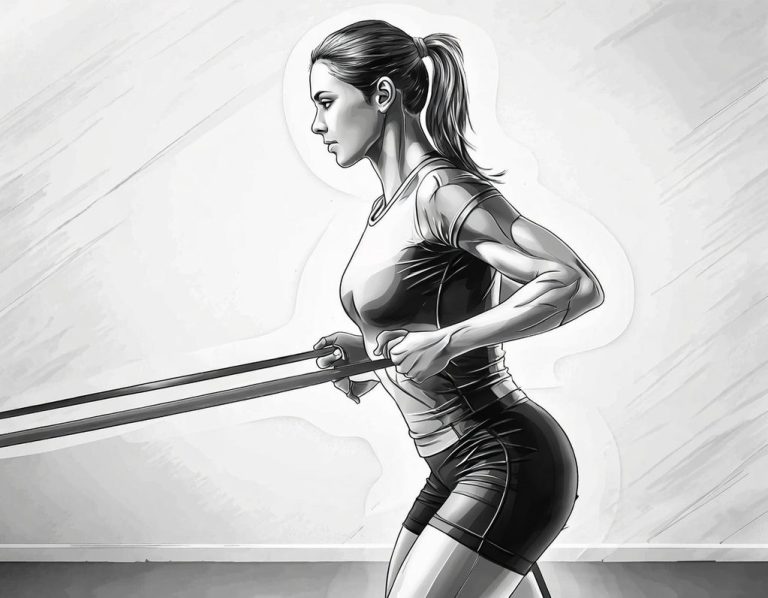
Band row
An effective exercise commonly utilised in home gym routines to target the muscles in your back, arms, and shoulders. This simple yet powerful movement involves anchoring a resistance band to a sturdy point and pulling the handles or ends towards your body, mimicking the action of rowing. Ideal for all fitness levels, resistance band rows are not only space-efficient but also versatile, allowing users to adjust the intensity by selecting bands of varying resistance. Incorporating this exercise into your home workout regimen can enhance strength and improve posture..
Reps
10-12
Band chest press
Enhance upper body strength, particularly in the chest, shoulders, and triceps, while utilising resistance bands. This is ideal for home workouts, as it allows users to perform a compound movement that mimics the traditional bench press without the need for bulky weights. By anchoring the resistance bands securely, users can adjust the tension to suit their fitness level, making the band chest press suitable for both beginners and experienced lifters. Additionally, its lightweight and portable nature means it can easily be incorporated into various workouts, promoting muscle growth and endurance while taking up minimal space in your home fitness setup.

Reps
10-12
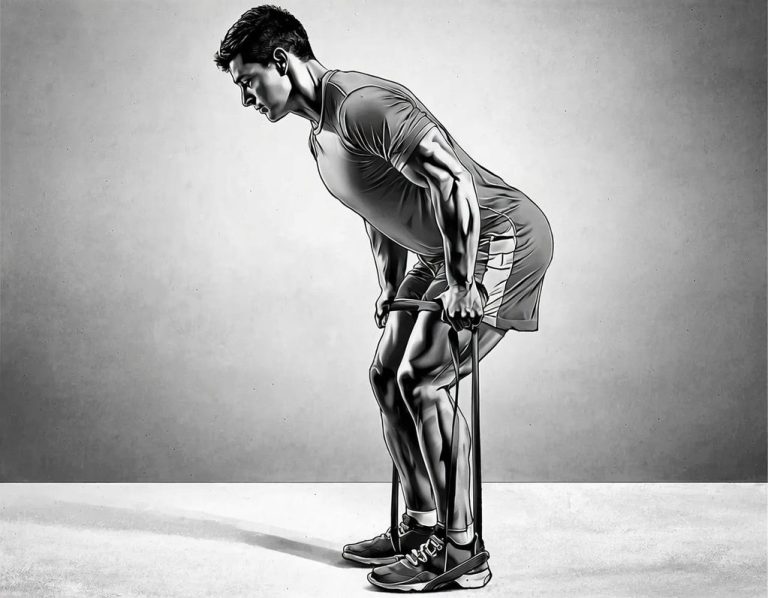
Band Romanian Deadlift
The Romanian deadlift with a resistance band is an excellent addition to your home gym routine, offering multiple benefits for strength training and muscle development. This exercise primarily targets the hamstrings, glutes, and lower back while also engaging the core for stability. Using a resistance band allows for a versatile workout that can be adjusted to various fitness levels, making it an ideal choice for both beginners and experienced lifters. The band provides constant tension throughout the movement, which enhances muscle activation and can lead to better results over time. Moreover, performing the Romanian deadlift at home with minimal equipment means you can easily incorporate this effective exercise into your daily routine without the need for heavy weights or gym memberships.
Reps each side
8-10
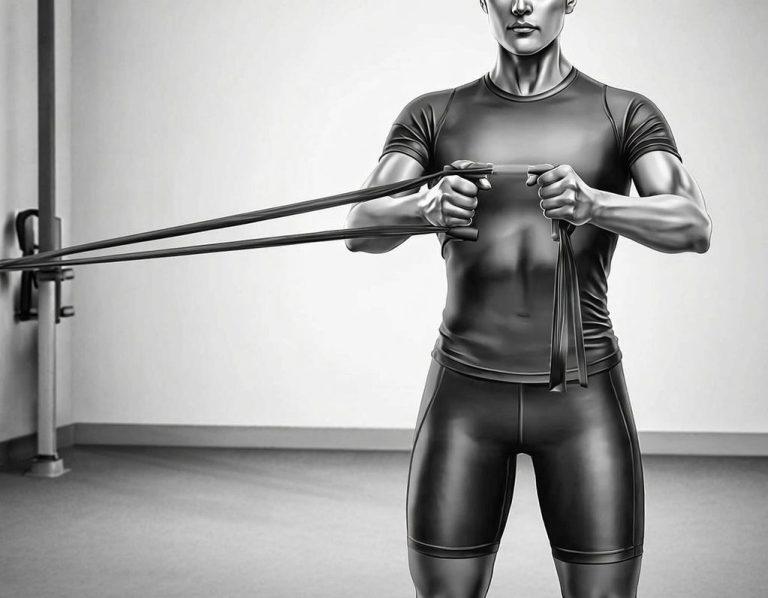
Pallof Press
core strength and stability. It is suitable for a home gym environment and engages core muscles while challenging balance. This exercise can significantly contribute to overall fitness levels. A key advantage of using resistance bands for the Pallof press is the ability to adjust the resistance, making it accessible for individuals of all fitness levels, from beginners to advanced athletes. Whether the goal is to improve athletic performance or to tone and strengthen the core, the Pallof press is a versatile addition to any workout routine. It is advisable to incorporate this exercise to reap its numerous benefits.
Verdict on the test
With the right resistance and controlled movement, this genuinely feels like a proper workout — not just polite elastic stretching. By round three you'll have stopped underestimating them.
Most people should budget around £15-£35 for a starter set. That's usually enough to get several resistance levels without wandering into "why does this elastic cost more than my weekly shop" territory.
Bands can genuinely build strength, especially for beginners, and they're excellent for consistency because they're so easy to use. Visible fat loss or muscle change depends far more on overall activity, diet, and sleep than on the equipment itself — and serious muscle gain further down the line may need heavier resistance than bands alone provide.
Train 2-4 times a week and you'll likely feel stronger and more controlled within a few weeks. Visible changes take longer, and depend on whether your weekend "one biscuit" plan turns into a full archaeological dig through the tin.
Who should buy resistance bands?
Resistance bands are a strong choice for:
- Beginners wanting a low-cost way to start.
- Busy people who need quick workouts at home.
- Flat or small-home users who need quiet, compact kit.
- Travellers who want portable exercise equipment.
- People returning to exercise after time off.
- Dumbbell owners who want extra warm-up and mobility options.
Who should avoid them?
They're less suited to:
- Advanced lifters chasing maximum strength.
- Anyone who wants precise, trackable progressive overload.
- People focused mainly on heavy lower-body training.
- Users who dislike fiddly anchoring points.
- Anyone expecting one £20 band set to replace an entire commercial gym. Ambitious, but no.
Progressive strength training
The smart answer isn't bands or dumbbells — it's both. Bands bring convenience and mobility; dumbbells bring clearer progression. Together they cover most of what a small home gym actually needs.
Safety and durability
- Check bands regularly for cracks, tears, thinning, or fraying.
- Don't anchor bands to wobbly furniture — a flying door handle is not a warm-up.
- Keep them away from sharp edges.
- Use a proper door anchor rather than improvising with a door hinge.
- Stay in control through each rep — no snapping back.
- Replace damaged bands immediately.
- Store away from direct heat and sunlight, which degrades the rubber over time.
If a band looks worn, retire it. Getting flicked by your own exercise equipment is both painful and remarkably hard to explain with any dignity.
Final verdict
Resistance bands are absolutely worth buying for most home gym users. They're affordable, compact, quiet, and versatile enough to cover full-body workouts, warm-ups, mobility, and beginner strength training — all from a size that fits in a kitchen drawer.
They won't replace heavy weights if serious strength is the goal, but as a first purchase for a small home gym, they're hard to beat. For around £15-£35, you get a genuinely useful training tool that takes up next to no room and asks nothing of your neighbours except maybe a slightly puzzled look through the window.